Asana's free plan is now a party of two
Asana cut its free plan to 2 users for accounts created after November 12, 2025. What changed, what the third teammate costs, and how to plan around it.

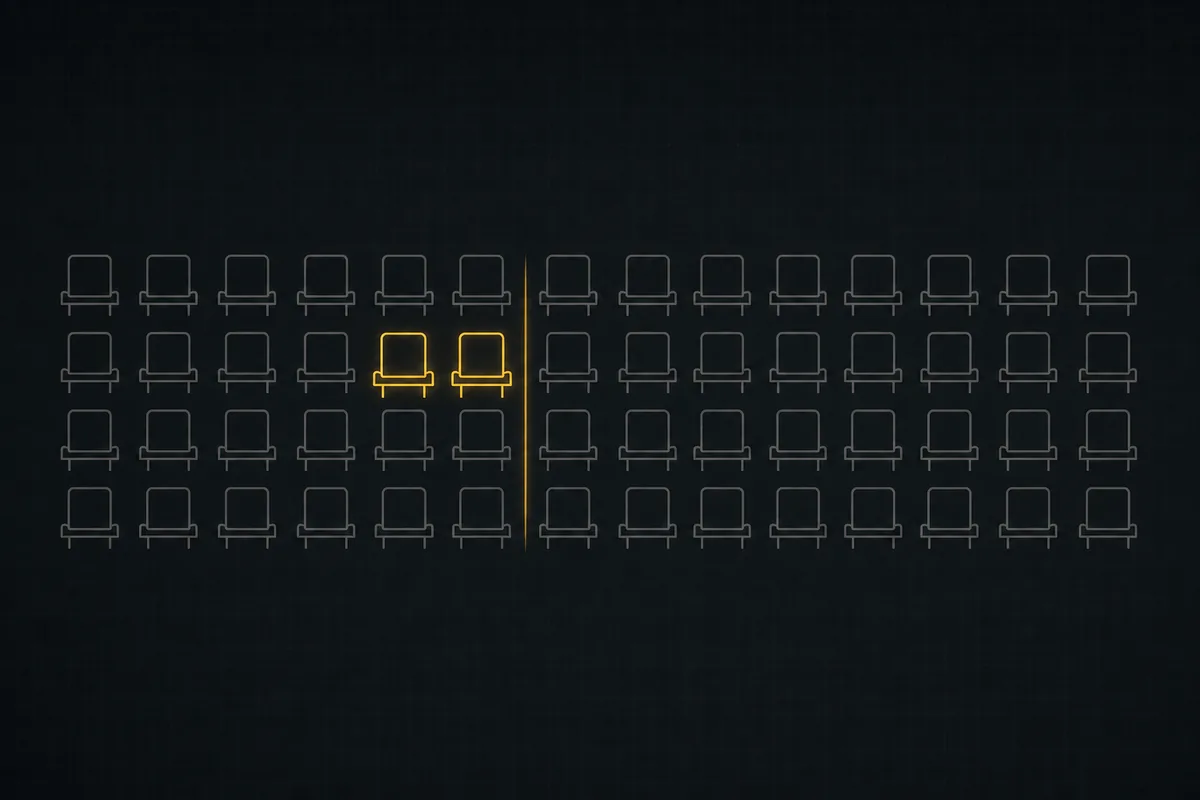
Asana did not send an email about this one. If your workspace is older than November 12, 2025, you would never notice: your free plan still holds ten people, exactly as it always did. The change applies only to accounts created on or after that date, and those get a Personal plan that holds two.
Re-checked on 23 September 2026: Asana's pricing page still reads "Up to 2 seats" on the free tier.
Most teams find out the same way. Two founders start a workspace, build a few projects, hire a third person, and go to send the invite. The invite does not go through. The upgrade prompt does. By then the projects, the task history, and the team's habits are all in Asana, which is exactly when a paywall works.
None of this is hidden. Asana's pricing page says Personal is for up to 2 users, and the help docs spell out the November 12, 2025 cutoff and the legacy plan behind it. It is just quiet, and it is uneven: two teams doing identical work now pay different amounts based on the month they signed up. Legacy accounts also cannot get the ten seats back once they move to a paid plan and later drop off it.
How many users does Asana's free plan allow?
Two, if the account was created on or after November 12, 2025. Ten, if it was created before that and has stayed on the free plan since.
| Legacy Personal (before Nov 12, 2025) | Personal (new accounts) | |
|---|---|---|
| Users | Up to 10 | Up to 2 |
| Tasks and projects | Unlimited | Unlimited |
| Views | List, board, calendar | List, board, calendar |
| Timeline, custom fields, rules, forms | Paid | Paid |
The rest of the free tier did not move and is still reasonable: unlimited tasks and projects, three views, and a long integration list. The seat count is the only thing that changed, and it happens to be the one number a growing team runs into first.
When the third teammate costs $132 a year
Asana Starter is $10.99 per user per month billed annually, or $13.49 month to month. Per user means per person, and everyone counts the same. The engineer closing tickets and the client contact who opens the board on Friday afternoon are the same line on the invoice.
So the third teammate is not a small step up. One annual seat is $131.88 a year, and you cannot buy just the one, because leaving Personal means paying for everybody in the workspace.
Take a common shape: three people building, two people watching. A founder who wants the roadmap, and a client who wants to know if the thing is done.
| Plan | Who pays | Monthly | Yearly |
|---|---|---|---|
| Asana Starter, annual | all 5 | $54.95 | $659.40 |
| Asana Starter, monthly | all 5 | $67.45 | $809.40 |
| Taskfolk Pro | 3 builders | $9 | $90 |
| Taskfolk Free | nobody | $0 | $0 |
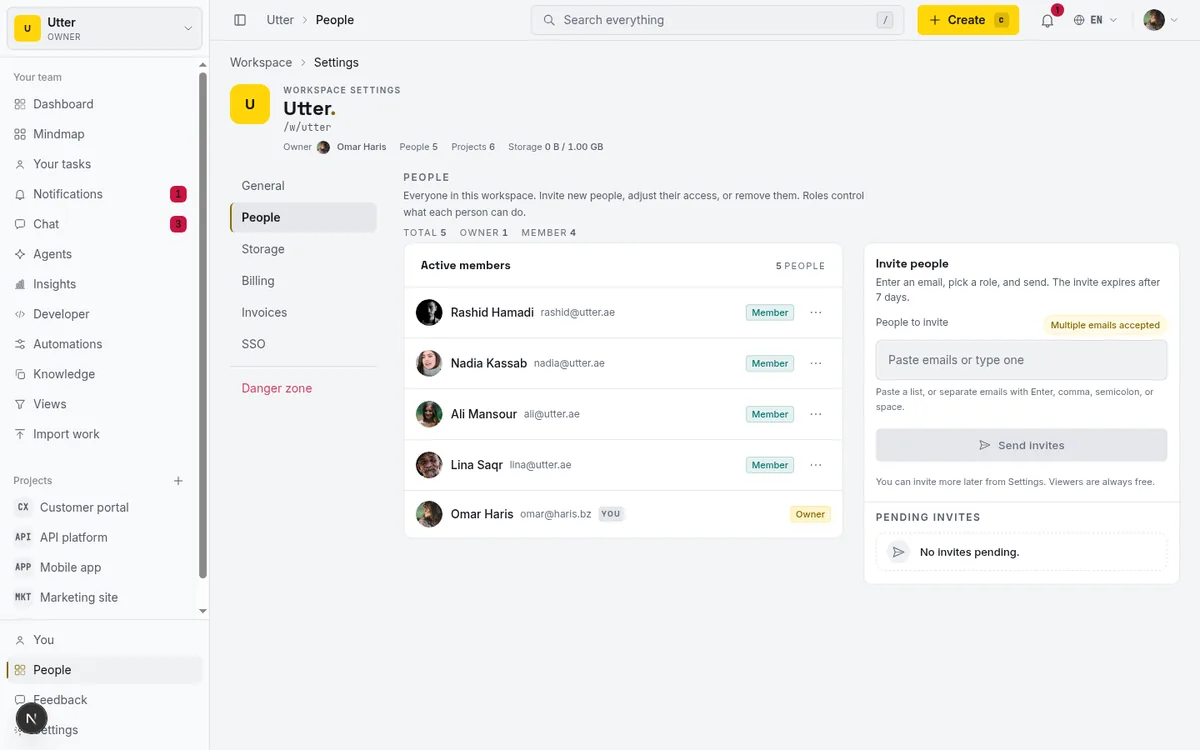
Taskfolk splits the two groups. Builders are $3 per month, or $30 a year. Viewers read projects, follow issues, and comment on nothing they should not touch, and they are free on every plan with no cap. The two watchers in that table are not a rounding error on the bill, they are simply not on it.
Free tiers are shrinking, and not only Asana's
Airtable did a smaller version of the same thing in February 2026, cutting the free plan from 1,200 records per base to 1,000, with bases over the new line going read-only until you deleted rows or paid. Different number, same shape: the ceiling drops, and the people already past it feel it first.
The reason is not villainy. A free tier is an acquisition budget, and when a company needs that budget to convert harder, the cheapest lever is to lower the ceiling for new signups only. Existing users keep their old deal, so nobody churns in protest, and the change lands quietly.
It does mean that "free" is a number you cannot plan around. It is a snapshot of what a company felt like giving away on the day you registered.
What our free plan is built around, caps and all
We took the opposite structure, so the honest thing is to say where the walls are.
Taskfolk Free has unlimited members and unlimited issues. The ceiling is capacity, not headcount: 5 projects, 128 MB of storage, 1 MB per file, 25 AI credits a month, 2 automation rules, and imports of up to 1,000 rows per run. That is a real ceiling. If you attach video to tickets, 128 MB goes in an afternoon, and 5 projects is a genuine stop for an agency juggling clients. Pro lifts all of it at $3 per builder.
The part we will not change is the shape: people are never the thing you pay for, and your signup date never decides what your plan includes. If we ever move a free limit, it moves for everyone at once, in public, and we should have to defend it.
Moving your Asana projects over
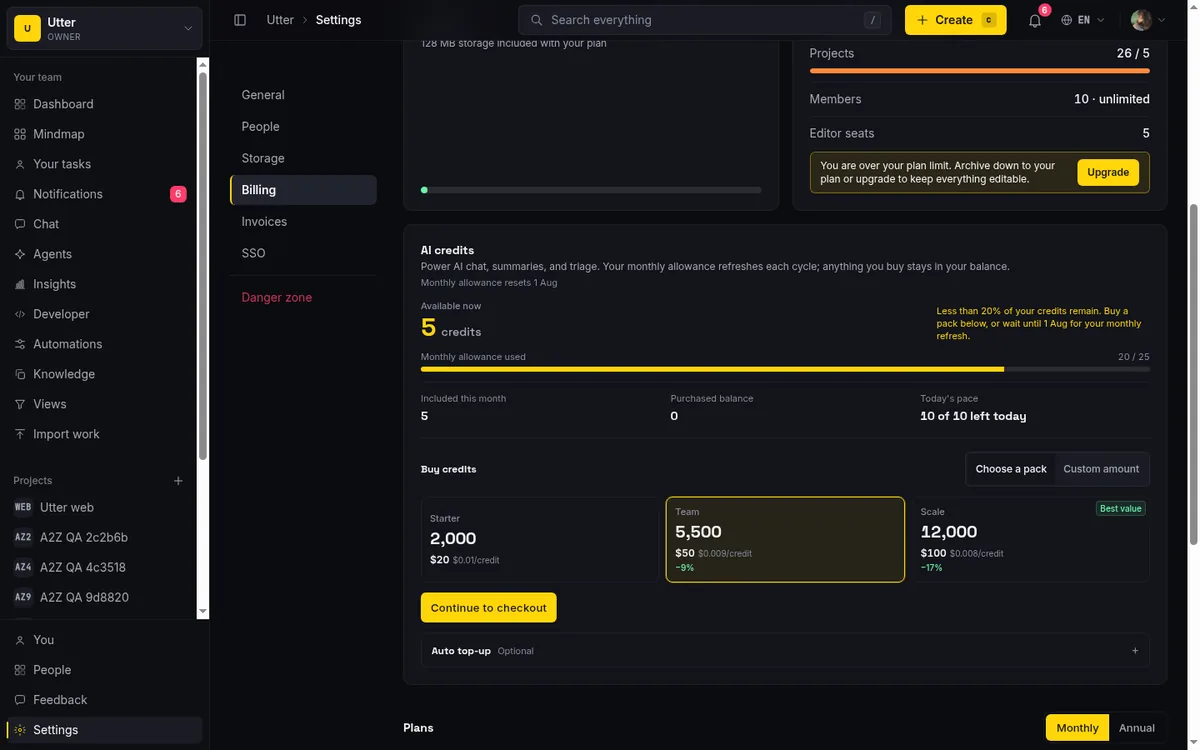
The import is not the hard part. You can connect Asana directly with a personal access token and a project ID, or upload a CSV export if you would rather not hand over a token. Tasks, descriptions, due dates, assignees matched by email, completion state, and tags come across. Free workspaces import up to 1,000 rows per run and Pro up to 10,000.
The advice that actually works: move one project, run it for two weeks next to Asana, and only then decide about the rest. A tracker migration is a few days of setup and a few weeks of muscle memory, and the second part is what people underestimate.
Agents are members, not seats
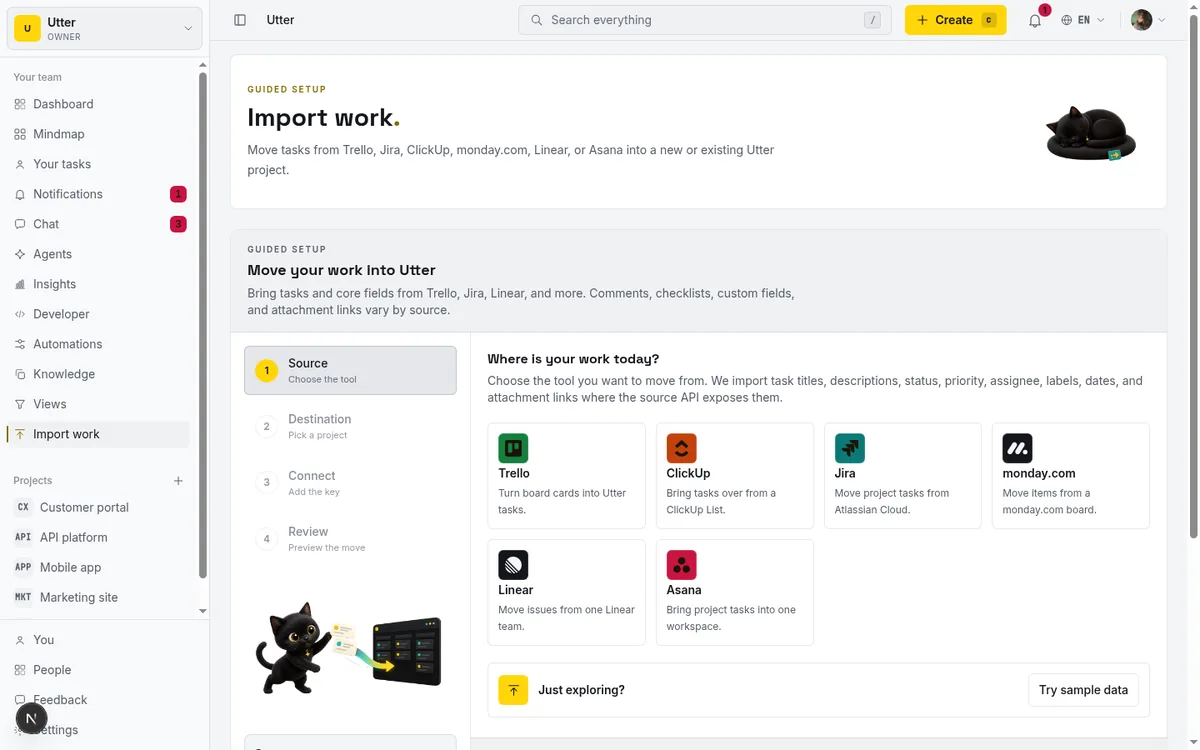
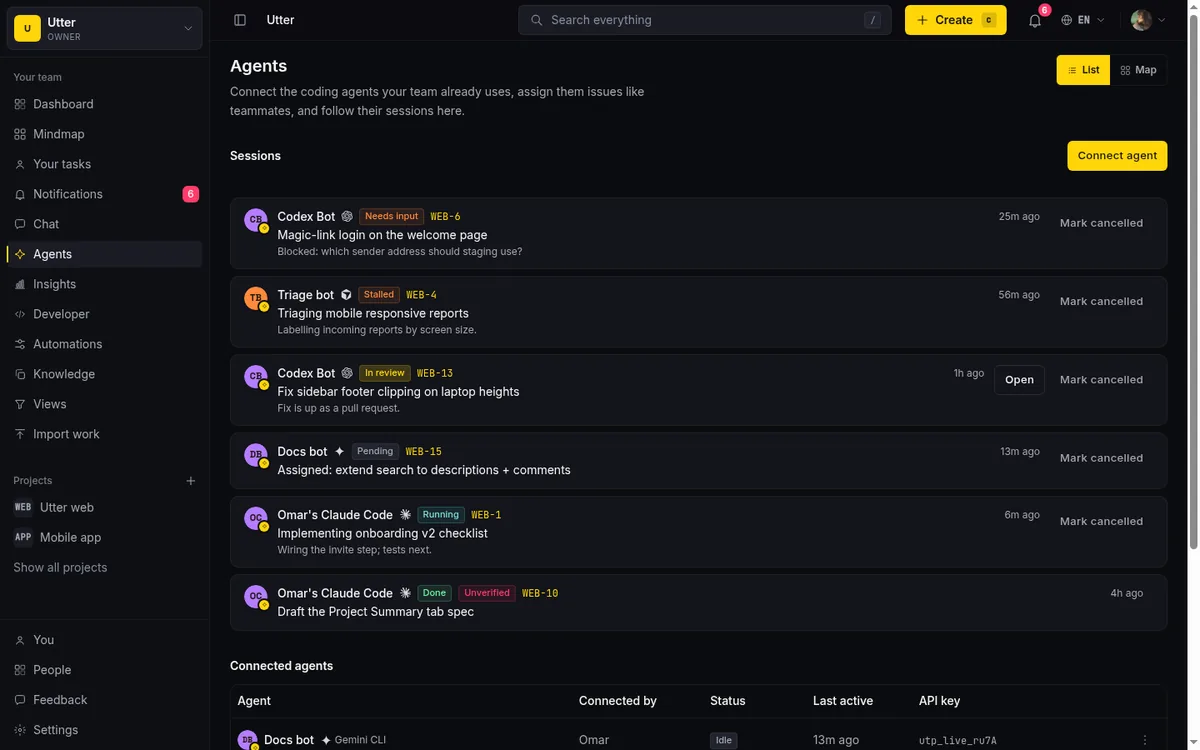
If your third teammate is not a person, this matters more than the price. Claude Code, Codex, and Cursor connect to a Taskfolk workspace over MCP or the REST API as named members. Each has a profile, gets assigned issues like anyone else, opens a session on the ticket while it works, and has every change attributed to it in the activity log. Agent members are never billed as seats.
On per-seat pricing, an agent that holds its own identity is another paid user, which quietly pushes teams toward sharing one human's credentials with a bot. That works right up until you need to know who changed the ticket.
When Asana is still the right answer
Plenty of the time. Asana is mature and well built, portfolios and goals and workload management have years of thought in them, approvals and proofing have no equivalent here, and the integration library is far deeper than ours. If your marketing and ops teams run their week inside it, switching to save $50 a month is a bad trade and you should not make it.
The narrower point is this: the free tier is now sized for a party of two, and it stopped being a place a small team can grow into. If that is where you are, the Taskfolk vs Asana comparison covers what each side actually does, and our pricing page has the whole number in one screen. Free is free for as many people as you want, and it does not care when you signed up.
Frequently asked questions
How many users does Asana's free plan allow?
Two, on any account created on or after November 12, 2025. Accounts created before that date keep a legacy version of the free plan that holds up to 10 people. Both versions include unlimited tasks and projects, so the seat count is the whole difference.
Does the old 10-user free plan still work?
Yes, if the workspace was created before November 12, 2025 and has stayed on it. Asana documents this as the legacy Personal plan. The catch is that it is one way: if the account moves to a paid plan and later drops back to free, it lands on the 2-user version.
What does a team of five pay on Asana Starter?
Starter is $10.99 per user per month billed annually, so five people cost $54.95 a month, about $659 a year. Paying month to month it is $13.49 per user, $67.45 a month. Everyone is a seat, including people who only read.
Is there a free project tracker that does not cap how many people join?
Taskfolk Free has unlimited members and unlimited issues; its caps are on capacity instead: 5 projects, 128 MB of storage, 25 AI credits a month, and 2 automation rules. Pro lifts those at $3 per builder per month, and viewers stay free on every plan.
Related reading
Free project management software: what the free tiers give you
What the free tiers of Trello, Asana, ClickUp, Notion and Jira actually give you, which cap stops a small team first, and how Taskfolk Free compares.
16 July 2026 · 16 min read
Asana alternatives that cost less and speak agent
Asana alternatives for growing teams: how Asana's tiered seats round your bill up, and how $3 per-editor pricing with free viewers and agents changes it.
16 July 2026 · 17 min read

100 uses, forever: the ClickUp counter that never resets
ClickUp's Free Forever plan meters Gantt and custom fields at 100 lifetime uses that never reset. How the counters work, and life without them.
18 August 2026 · 6 min read
What happens at issue 251 on Linear's free plan
Linear Free stops at 250 non-archived issues. What the block actually does, the seat math for a team of eight, and how to move without losing history.
18 August 2026 · 6 min read
Record 1,001: when your Airtable base stops taking tasks
Airtable's free plan caps every base at 1,000 records, counted across all tables. What the cap covers, who should stay, and how task teams move out.
18 August 2026 · 6 min read
Jira alternatives in 2026: what you actually pay per seat
Six Jira alternatives compared honestly: Linear, ClickUp, Asana, Monday, Trello, and Taskfolk, with real per-seat math and where each one actually fits.
11 July 2026 · 9 min read
Notion's free plan and 1,000 blocks: the wall at member two
Notion Free is unlimited for one person. Add a second member and the workspace is capped at 1,000 blocks. What that costs, and when to run the work elsewhere.
18 August 2026 · 6 min read
Project management for small agencies (clients in, chaos out)
Project management for agencies without the seat tax: scoped projects isolate each client, guests and viewers are free, and public forms take intake with no account.
16 July 2026 · 18 min read
A Trello alternative for when a board stops being enough
A Trello alternative for when a board stops being enough: honest pricing as of July 2026, and how to keep the board while adding sprints, a backlog and reports.
16 July 2026 · 17 min read
Shortcut alternatives for teams running AI agents
Shortcut alternatives for software teams: July 2026 pricing checked at the source, the seat math, and what changes when an AI agent is a real member.
26 July 2026 · 11 min read
Add a comment
Start the conversation.