Comparison

Taskfolk vs Linear.
Linear is fast, focused, and loved by engineering teams for good reason. Taskfolk aims at the same calm feel, adds AI agents as real teammates, and stops charging you for people who only read the board.
Last updated: 15 Jul 2026
The quick answer
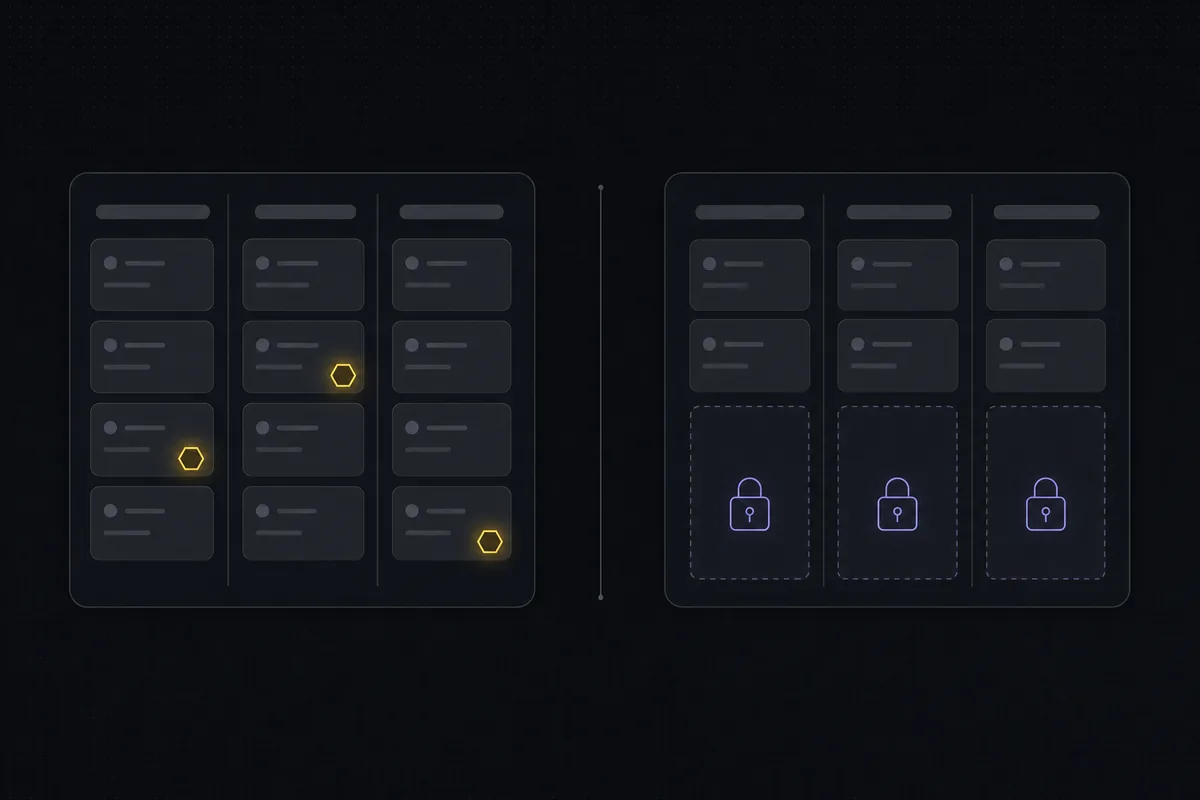
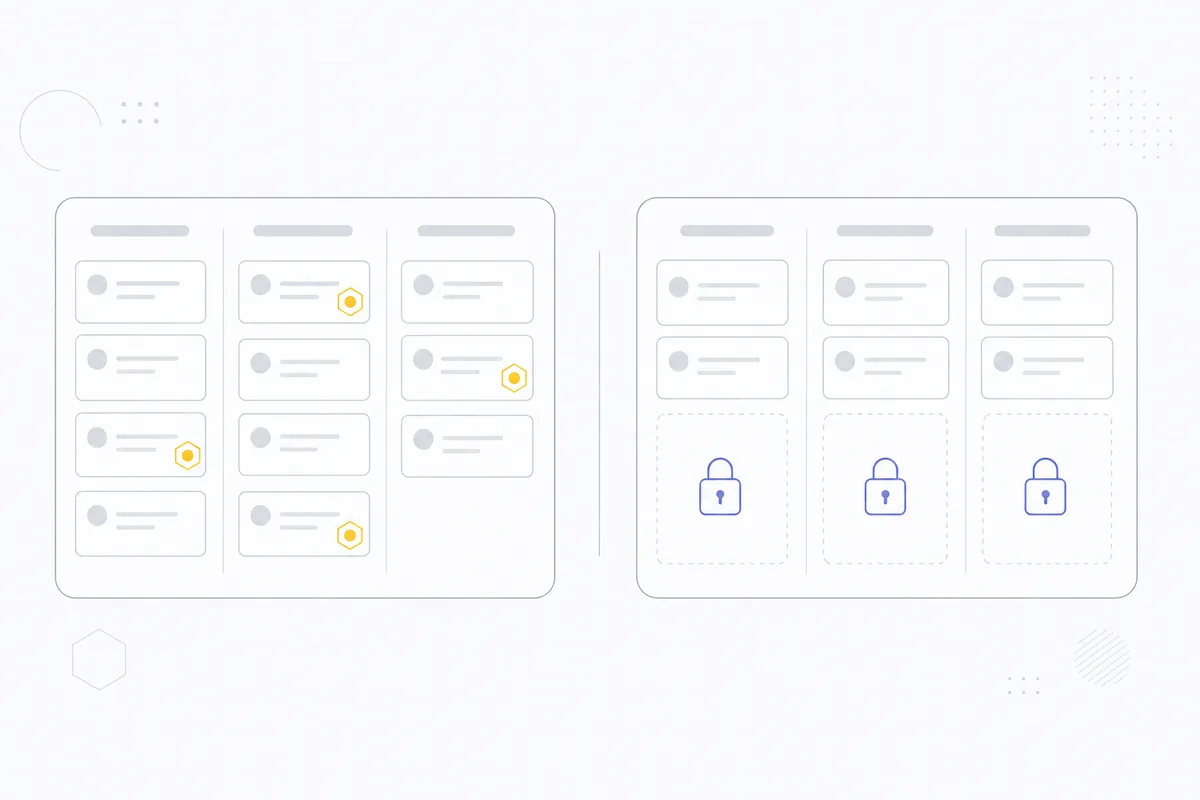
Stay on Linear if your team lives in its keyboard-first triage flow or leans on Insights cycle analytics. Move to Taskfolk if read-only teammates are inflating the bill, since viewers are free on every plan with no cap, and if you want AI coding agents working issues as named members with sessions visible on the ticket. Linear Basic is $10 per user; Taskfolk Pro is $3 per builder.
The short version.
Pick Taskfolk if
- You want AI coding agents assigned to issues as named members, with their sessions visible on the ticket.
- Half your company wants to see the roadmap without a $10 seat each. Viewers are free on Taskfolk, no cap.
- You need docs, request-intake forms, and a timeline in the same product instead of separate tools.
Stick with Linear if
- Your whole team lives in the keyboard-first triage flow and loves it. That polish is real.
- You want cycle analytics like Linear Insights that are tuned specifically to engineering velocity.
- You are already on Linear and nobody is watching the seat count.
Feature by feature.
| Feature | Taskfolk |  Linear Linear |
|---|---|---|
| Price, standard tier | $3 per builder / month. Viewers free, no cap | $10 per user / month (Basic). Every user is a paid seat |
| Business tier | $6 per builder / month | $16 per user / month |
| Free plan | Unlimited members, 5 projects, no issue cap | Unlimited members, 2 teams, capped at 250 issues |
| Free viewers on paid plans | Yes, unlimited | No. Guest access starts on Business |
| Boards, backlog, sprints | Yes | Yes (cycles) |
| Custom statuses and workflow rules | Yes, per project, with transition rules and WIP limits | Statuses per team, lighter rules |
| Named AI agents as members | Yes, agents join as members with their own profile and attribution | Agent integrations, tied to its paid seats |
| Live agent sessions on the ticket | Yes, see which agent is running, blocked, or ready for review | No session view on the issue |
| MCP server | Yes, first-party, covers the full API | Yes, first-party |
| Docs and wiki | Built in | Project documents, lighter than a wiki |
| Request-intake forms | Yes, public branded forms that file issues | Intake via Asks, Business plan and up |
| Trial | 14 days of Pro on your first workspace, no card | Free plan, then paid per seat |
Rival prices and limits are public list prices as of August 2026. Check linear.app/pricing for current numbers.
What a real team pays.
Linear charges per user, and read access is what quietly inflates the bill. Product, design, support, and leadership all want to follow the work; on Linear each of them is another paid seat. On Taskfolk they are free viewers.
Team of 6 builders and 15 viewers, per month
- Linear Basic: 21 paid seats at $10 = $210
- Taskfolk Pro: 6 builders at $3 = $18, viewers free
Linear's Free plan allows unlimited members but caps you at 250 non-archived issues and 2 teams, which active teams outgrow in weeks. Taskfolk's Free plan has no issue cap.
Run it on your own team
Count the people who create and move work, then the people who mostly read. That split, not the sticker price, is what decides the bill.
- TaskfolkProviewers free5 x $3$15 / month
- LinearBasicviewers are paid seats20 x $10$200 / month
Standard team tier, annual billing, public list prices as of August 2026. Monday has a 3-seat minimum and sells seats in buckets; its real bill is at least the figure shown.
Cheapest way to settle this is to try it
14 days of Pro on your first workspace, no card. Import a real project, put your actual team in, and look at the board on a Monday.
Where Linear is genuinely strong.
Speed and polish
Linear's keyboard-first UI and triage flow are the best in the category. If your team measures tools by keystrokes, Linear sets the bar.
Engineering analytics
Linear Insights gives velocity and cycle analytics tuned for engineering leaders, on the Business plan.
Opinionated method
Cycles, triage, and projects come with a clear philosophy. Teams that adopt the Linear method wholesale get a lot of structure for free.
Where Taskfolk is different.
Agents are teammates, not scripts
Connect Claude Code, Codex, Cursor, or any MCP client as a named agent. Assign it issues, watch its session run on the ticket, and see every change attributed to it in the activity log.
You pay for builders only
Viewers are free with no cap on every plan, not a Business-tier guest feature. The bill tracks the people changing work, not the people watching it.
More of the work in one place
Docs, public intake forms, timeline with dependencies, mindmap, and reports ship in the product, so following the work does not require three more subscriptions.
Switching from Linear.
The honest objection to any comparison page is the move itself. Here is what it takes, without the sales gloss.
Connect Linear
Paste a Linear API key and pick the team. Issues, statuses, assignees, labels, descriptions, and comments come across.
Map the columns
You get a preview before anything is written. Match their statuses, types, and priorities to yours, and merge the columns that were always the same thing.
Run the import
Free workspaces import 1,000 rows per run, Pro 10,000, Business 50,000. Anything large runs in the background and emails you when it finishes.
Invite the team
Add the people who change work as members and everyone else as viewers. Viewers are free with no cap, so there is no reason to leave stakeholders out.
What comes across
Titles, types, statuses, priorities, assignees matched by email, labels, descriptions, comments, attachment links, due dates, and estimates.
What does not
Activity history, tool-specific custom fields, and automation rules. Rules are worth rebuilding by hand anyway; most teams find half of them were dead.
Linear teams map cleanly onto Taskfolk projects, so most moves are one import per team. Cycles become sprints; the dates carry over as sprint dates.
If it does not work out
Your data stays yours
Every issue, comment, and attachment is readable through a REST API with over 180 operations. Nothing is trapped in a format only we can open.
No card to start
The trial needs an email address. There is no card on file, so there is nothing to cancel if you walk away.
Free is a real plan
When the trial ends the workspace drops to Free and keeps working. It does not lock, and it does not hold your issues hostage.
Common questions.
Can I import from Linear?
Yes. Taskfolk's importer brings issues, statuses, assignees, and comments across. Free workspaces can import up to 1,000 rows per run, Pro 10,000, Business 50,000.
Does Taskfolk have cycles?
Taskfolk uses sprints, which work the same way: time-boxed iterations with a backlog, velocity, and burndown reports. They ship on every plan, including Free.
Is Taskfolk as fast as Linear?
Taskfolk is built to feel calm and quick, with keyboard shortcuts for the common moves. Linear's keyboard-first depth is still ahead; if that is your main buying criterion, try both on real work for a week.
Linear has an MCP server too. What is different?
Both products let agents in over MCP. The difference is what happens after: on Taskfolk an agent is a named member with a profile, assigned issues, and a live session view on the ticket, and it never counts as a billed seat.
What does Taskfolk not have that Linear has?
Linear Insights-style engineering analytics and the same depth of keyboard-first triage. If those two carry your workflow, Linear is the safer pick.
What is Linear's 250 issue limit?
Linear's Free plan caps a workspace at 250 non-archived issues and 2 teams. It is a hard stop: once you cross 250, Linear blocks new issue creation until you archive old issues or upgrade to Basic at $10 per user per month. Active teams usually hit the cap within a few weeks. If you want a free plan without an issue cap, Taskfolk's Free plan has unlimited issues and unlimited members, with up to 5 projects and 128 MB of storage, and its Linear importer moves issues, statuses, labels, and comments across with an API key.
Try the whole thing free.
Every new team gets 14 days of Pro on their first workspace, no card. Bring a project over, connect an agent, and compare on your own work.