What happens at issue 251 on Linear's free plan
Linear Free stops at 250 non-archived issues. What the block actually does, the seat math for a team of eight, and how to move without losing history.

You notice it as an error, not a warning. Someone goes to file a bug, hits create, and Linear tells them the workspace is at its issue cap. Whatever warning existed, nobody read it. The create button just stops working.
Linear's free plan allows 250 non-archived issues. Members are unlimited, which is genuinely generous, and you get 2 teams and 10 MB file uploads. But the 250 is a hard stop: until someone archives old issues or the workspace upgrades, nobody creates anything new. For a team shipping at any real pace, that is a few weeks to a few months of work.
What Linear's 250 issue limit actually counts
The word "non-archived" is doing all the work in that sentence. A bug you closed six months ago still counts against the 250 until someone archives it. Finished work occupies the budget.
So the free plan comes with a chore attached. Someone has to sweep completed issues into the archive to keep room for new ones. Nothing is lost when they do, archived issues stay searchable, but it is a task that exists only because of the cap, and it is exactly the kind of task a team forgets about until creation breaks on a Thursday afternoon.
The three doors at issue 251
Archive. Free, and fine if your closed-issue pile is genuinely dead. It buys you weeks, not years, and you will be standing here again.
Pay. Linear Basic is $10 per user per month. This is where the shape of your team starts to matter, because Linear charges per member, not per person who writes code. The designer who files two issues a month, the founder who reads the board on Mondays, the support lead who watches bug tickets: all $10.
Move. Most teams do not, because they assume migration means losing history. That has not been true for a while.
The math for a team of eight
Take six people who build and two who watch. A support lead who needs to see bug status and a founder who reads the roadmap. Neither will ever drag a card.
| Who pays | Per month | Per year | |
|---|---|---|---|
| Linear Basic | all 8 at $10 | $80 | $960 |
| Taskfolk Pro | 6 builders at $3, viewers free | $18 | $216 |
The interesting number is not the $744 gap. It is the two watchers: $240 a year on Linear, nothing on Taskfolk. That is the part that scales badly. Every stakeholder you add for visibility is another $120 a year for read access, so the instinct to open the board up to the whole company arrives with a bill.
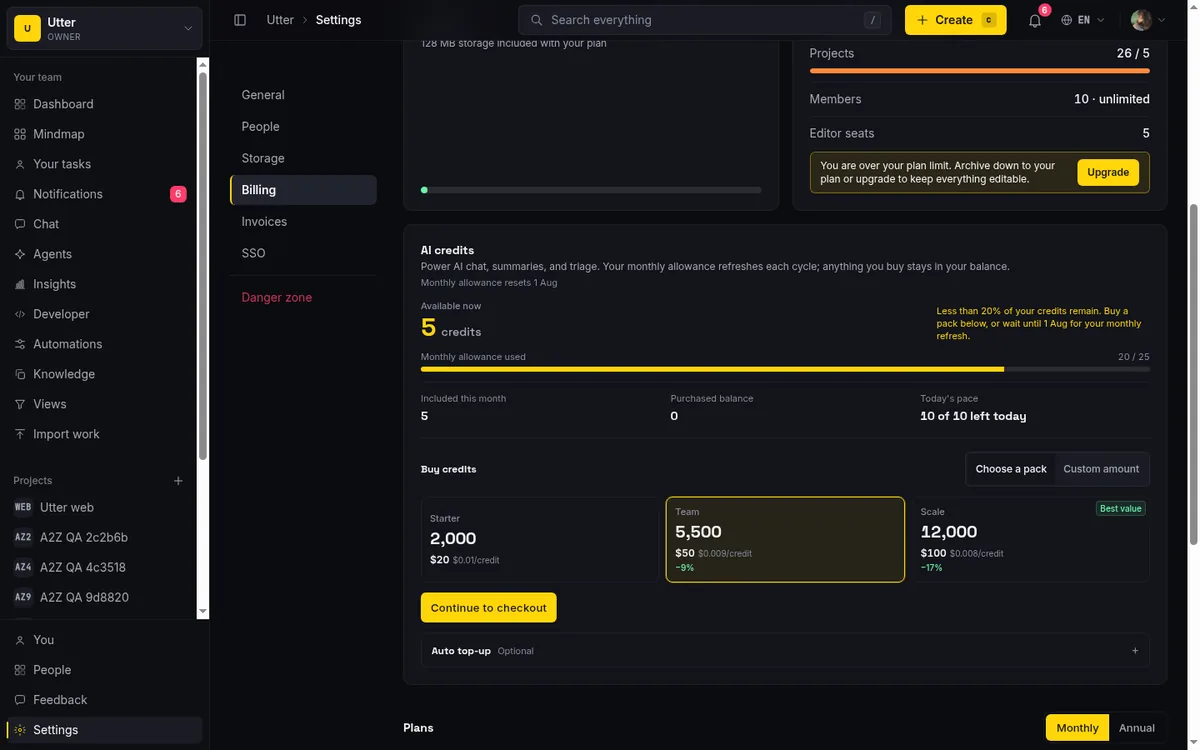
Our free plan has no issue cap and no member cap, but it has its own ceilings and you should hear them from us rather than find them: 5 projects, 128 MB of workspace storage, 1 MB per file, 25 AI credits a month, and imports of up to 1,000 rows per run. If your team attaches large files to everything, 128 MB disappears quickly and you will end up on a paid plan for storage instead of for issues. What you will not hit is a wall on the thing a tracker exists to hold. Full numbers are on the pricing page.
Moving without losing the history
The importer takes a Linear API key. Paste it, pick what to bring, and issues, statuses, assignees, labels, and comments come across. A design agency that switched earlier this year moved 172 issues in about two seconds, which is roughly how long it takes to read this sentence.
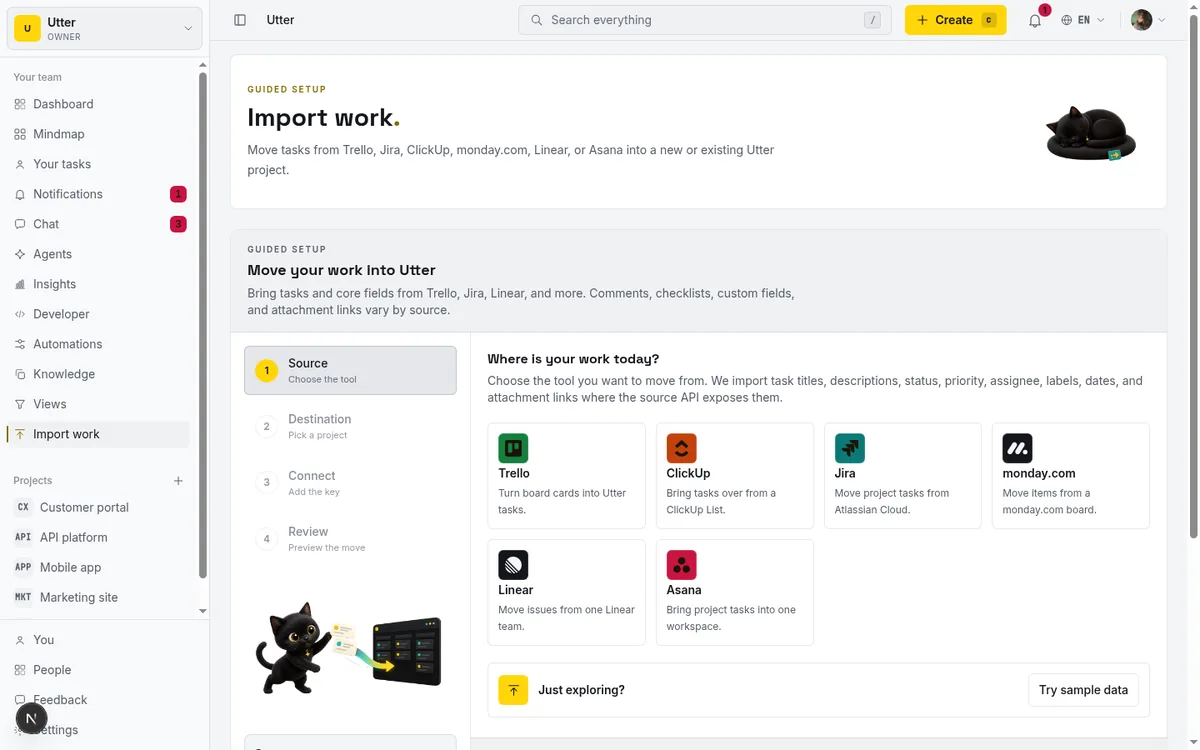
What lands where:
| From Linear | In Taskfolk |
|---|---|
| Issues | Issues with title and description |
| Workflow states | Board status columns |
| Assignees | Assignees |
| Labels | Labels |
| Comments | Comments on the issue |
Two practical notes. The free plan imports 1,000 rows per run, which is four times the entire Linear free cap, so a team arriving from a full free workspace fits comfortably. And the boring migration process is still the right one: bring one project over, run it for two weeks next to Linear, then move the rest or decide not to. Nobody has to declare a switch on day one.
AI agents as named members
If part of why your issue count climbed is that agents are now filing and closing work, a per-issue ceiling is an awkward place to meet that trend.
On Taskfolk an AI agent is a member. Claude Code, Codex, and Cursor connect with their own API key and get their own profile, so work assigned to an agent is assigned to a name, its runs show as sessions on the ticket, and every change it makes is attributed to it in the activity log. Agent members are never billed as seats.
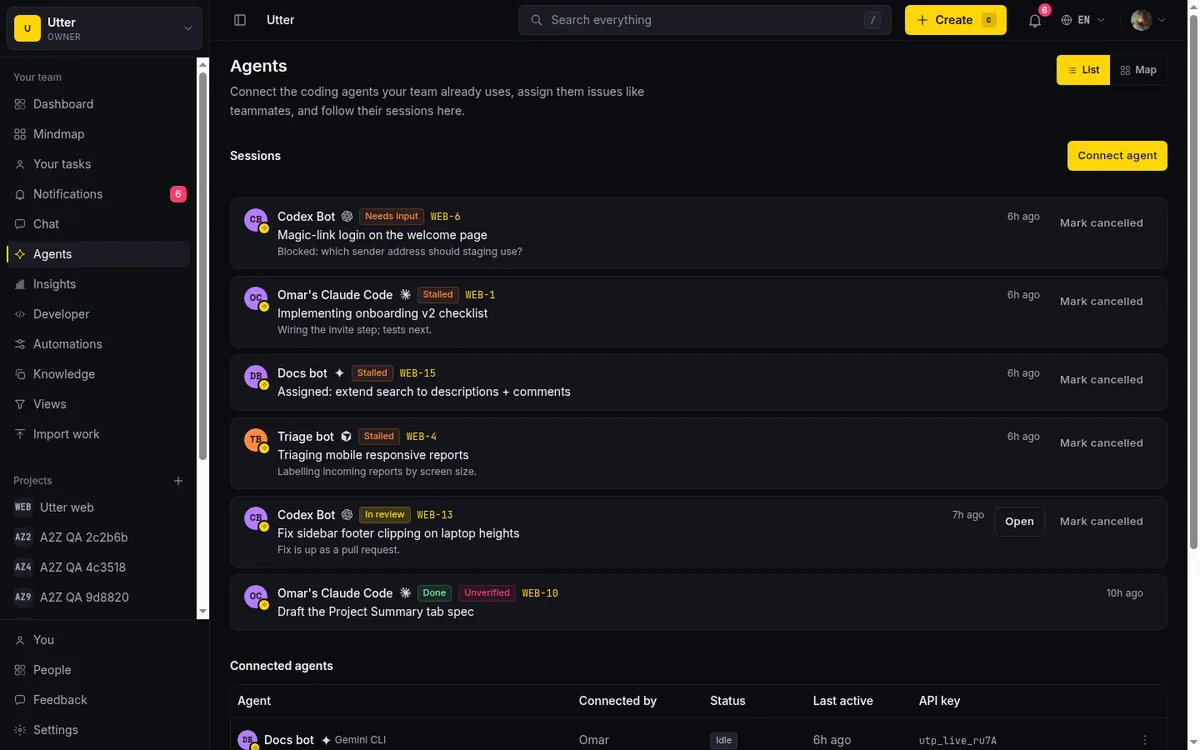
That is a structural difference rather than a feature-list one. On a strict per-seat tool, giving an agent an identity means paying for another user, which quietly pushes teams toward running agents under a shared human account where nobody can tell afterwards who did what.
Linear is not the villain here
Linear is fast and unusually well built. Its keyboard-first triage is the best in the category, the cycle model is coherent, and Insights gives engineering leaders analytics we do not match today. None of that changes because of a cap.
And the cap is a business decision, not a flaw. Free plans exist to become paid plans, and Linear picked issue count as the lever. It is at least a legible lever, arguably more honest than a free tier that works fine until you need one specific feature. If Linear's speed and its cycle workflow carry how your team works, pay the $10 and stop reading comparison posts. That is a real answer, and for some teams it is the right one.
The question worth asking is narrower than "which tool is better." It is: are you about to start paying per seat for people who only read? If seven of your eight are builders, the difference is small enough to ignore. If half the workspace is watching, the answer changes, and it keeps changing every time you add someone.
If you want the side-by-side rather than the argument, Taskfolk vs Linear lays out both columns including what Linear still does better. If Linear is not the only tool you are weighing, Linear alternatives covers where teams actually land. And if you just want to see whether your issues survive the trip, the importer runs on the free plan, so you can find out before you decide anything.
أسئلة شائعة
كم عدد التذاكر المسموح بها في خطة Linear المجانية؟
250 تذكرة غير مؤرشفة. عدد الأعضاء غير محدود، ومعك فريقان ورفع ملفات حتى 10 ميغابايت، لكن عدد التذاكر محدود، والتذاكر المغلقة تظل محسوبة حتى يؤرشفها أحد.
ماذا يحدث عند بلوغ 250 تذكرة في Linear؟
يتوقف إنشاء التذاكر الجديدة. هو منع كامل وليس تنبيها، ويستمر حتى تؤرشف ما يكفي من التذاكر القديمة للنزول تحت الحد، أو ترقّي إلى خطة مدفوعة بعشرة دولارات لكل مستخدم شهريا.
هل تحدّ خطة Taskfolk المجانية عدد التذاكر؟
لا. التذاكر والأعضاء بلا حد في الخطة المجانية. الحدود الحقيقية في مكان آخر: 5 مشاريع، و128 ميغابايت لتخزين مساحة العمل، وميغابايت واحد لكل ملف، و25 رصيد ذكاء اصطناعي شهريا، و1000 صف في كل عملية استيراد.
هل أنتقل من Linear إلى Taskfolk دون فقدان التعليقات؟
نعم. الصق مفتاح Linear في أداة الاستيراد فتنتقل التذاكر والحالات والمكلّفون والوسوم والتعليقات معا. نقلت إحدى الوكالات 172 تذكرة في ثانيتين تقريبا. وتبقى النصيحة المعتادة: انقل مشروعا واحدا أولا وشغّله بجانب Linear أسبوعين.
قراءات ذات صلة
بدائل monday.com المصممة لفرق البرمجيات لا لعمليات التسويق
بدائل monday.com لفرق البرمجيات: أسعار حقيقية (حد أدنى من 3 مقاعد مقابل 3 أو 6 دولارات لكل مقعد منفّذ)، وحالات مدعومة بالفئات، وسبرنتات مع ترحيل العمل غير المكتمل، ووكلاء أعضاء مجانيون لا تكاملات مفوترة.
16 يوليو 2026 · 12 د قراءة
بدائل ClickUp للفرق التي تريد الهدوء لا مزيدًا من الميزات
بدائل ClickUp للفرق التي تريد أداة تتبع هادئة يتبنّاها الفريق فعلًا. أسعار يوليو 2026 وتكاليف الذكاء الاصطناعي بصراحة، والمواضع التي لا يزال ClickUp يتفوق فيها، ووكلاء Taskfolk الذين ينضمون أعضاءً مجانيين.
16 يوليو 2026 · 15 د قراءة

100 uses, forever: the ClickUp free plan counter that never resets
ClickUp's Free Forever plan meters Gantt and custom fields at 100 lifetime uses that never reset. How the counters work, and life without them.
18 أغسطس 2026 · 6 د قراءة
Asana's free plan is now a party of two
Asana cut its free plan to 2 users for accounts created after November 12, 2025. What changed, what the third teammate costs, and how to plan around it.
18 أغسطس 2026 · 6 د قراءة

Notion's free plan and 1,000 blocks: the wall at member two
Notion Free is unlimited for one person. Add a second member and the workspace is capped at 1,000 blocks. What that costs, and when to run the work elsewhere.
18 أغسطس 2026 · 6 د قراءة
بدائل Shortcut للفرق التي تشغّل وكلاء الذكاء الاصطناعي
بدائل Shortcut لفرق البرمجيات: أسعار يوليو 2026 من المصدر، وحسبة المقاعد، وما الذي يتغير حين يصير وكيل الذكاء الاصطناعي عضوًا حقيقيًا.
26 يوليو 2026 · 11 د قراءة
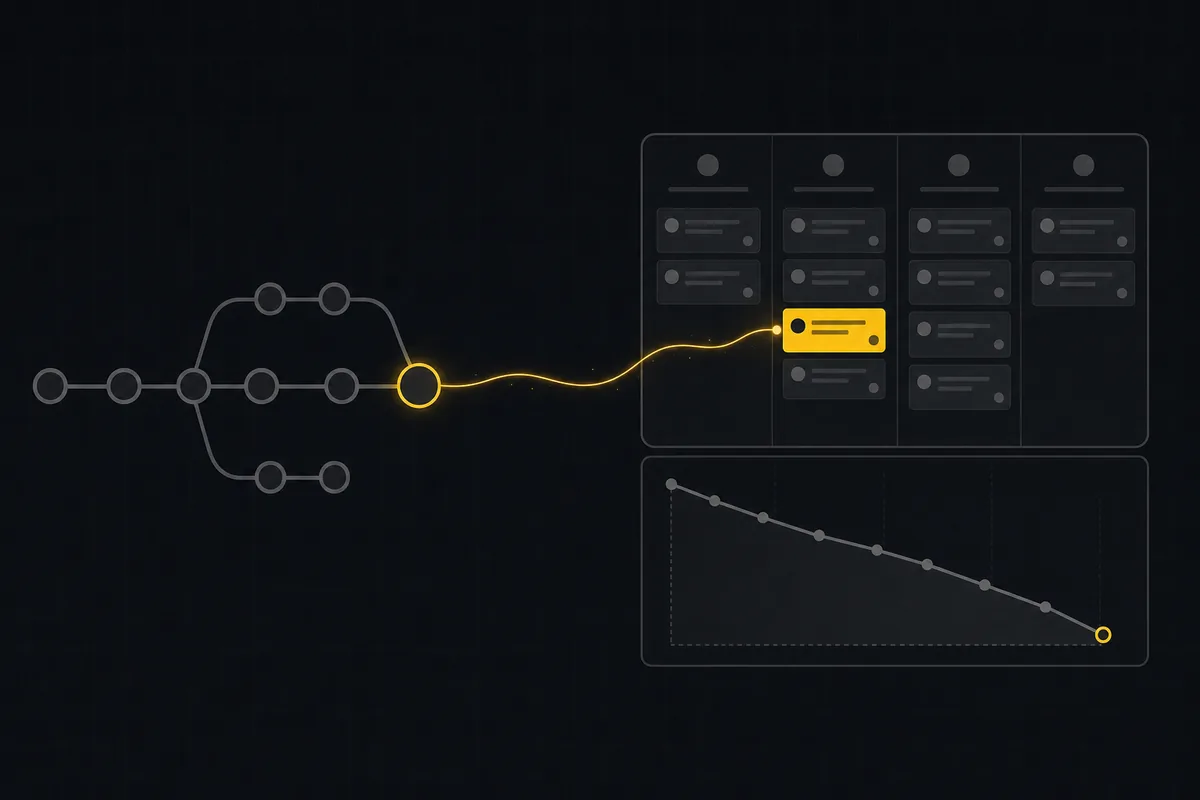
بديل GitHub Issues عندما تكبر المشاريع على المستودع
بديل GitHub Issues للفرق التي تجاوزت Issues وتبقي GitHub للكود: حالات حقيقية بدل الوسوم، باكلوج مرتّب، مخطط العمل المتبقي، ربط الـ commits بالتذاكر، ومقاعد مجانية لوكلاء الذكاء الاصطناعي.
16 يوليو 2026 · 13 د قراءة
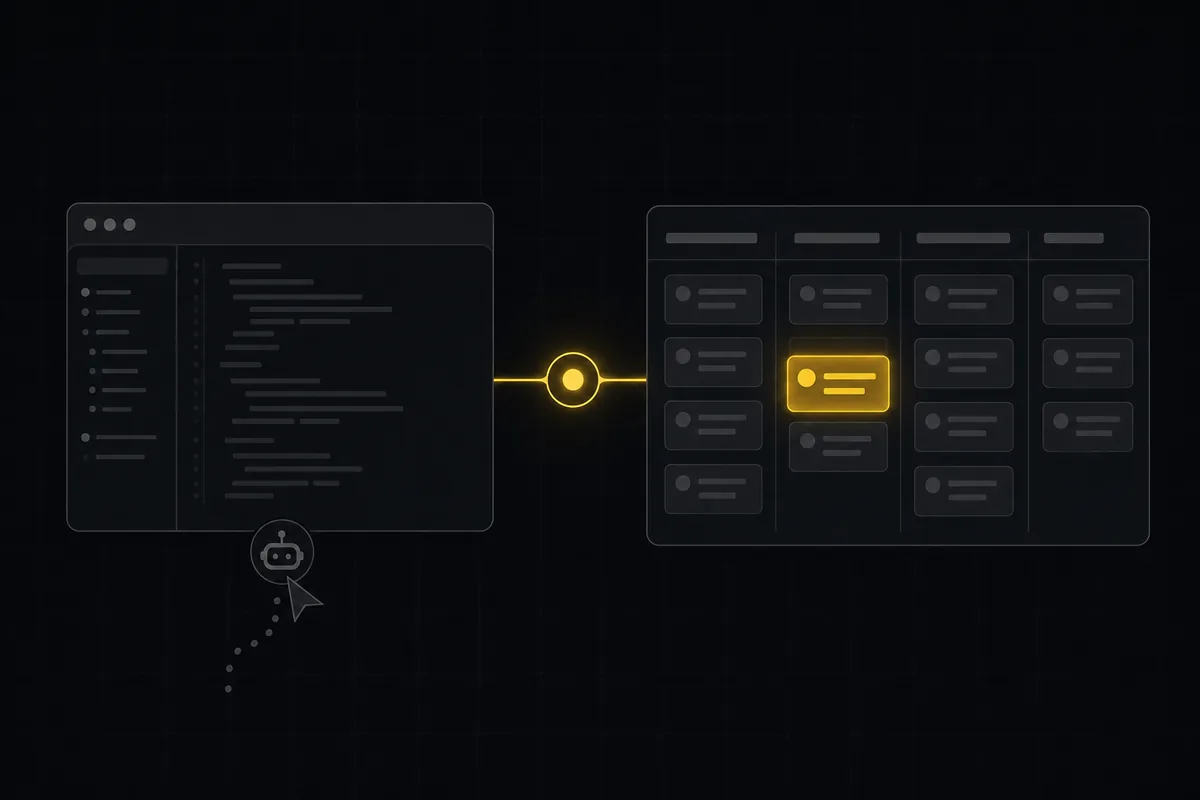
إدارة المهام في Cursor: امنح الوكيل لوحة مشتركة عبر MCP
إدارة المهام في Cursor تعني عادةً Task Master محليًا أو ملف .cursor/rules مكتوبًا بيدك. اربط Cursor بلوحة مشتركة عبر MCP، فيقرأ الوكيل المهام، ويستلم العمل المفوض إليه، ويبلغ عن جلسات يستطيع البشر مراجعتها.
16 يوليو 2026 · 12 د قراءة
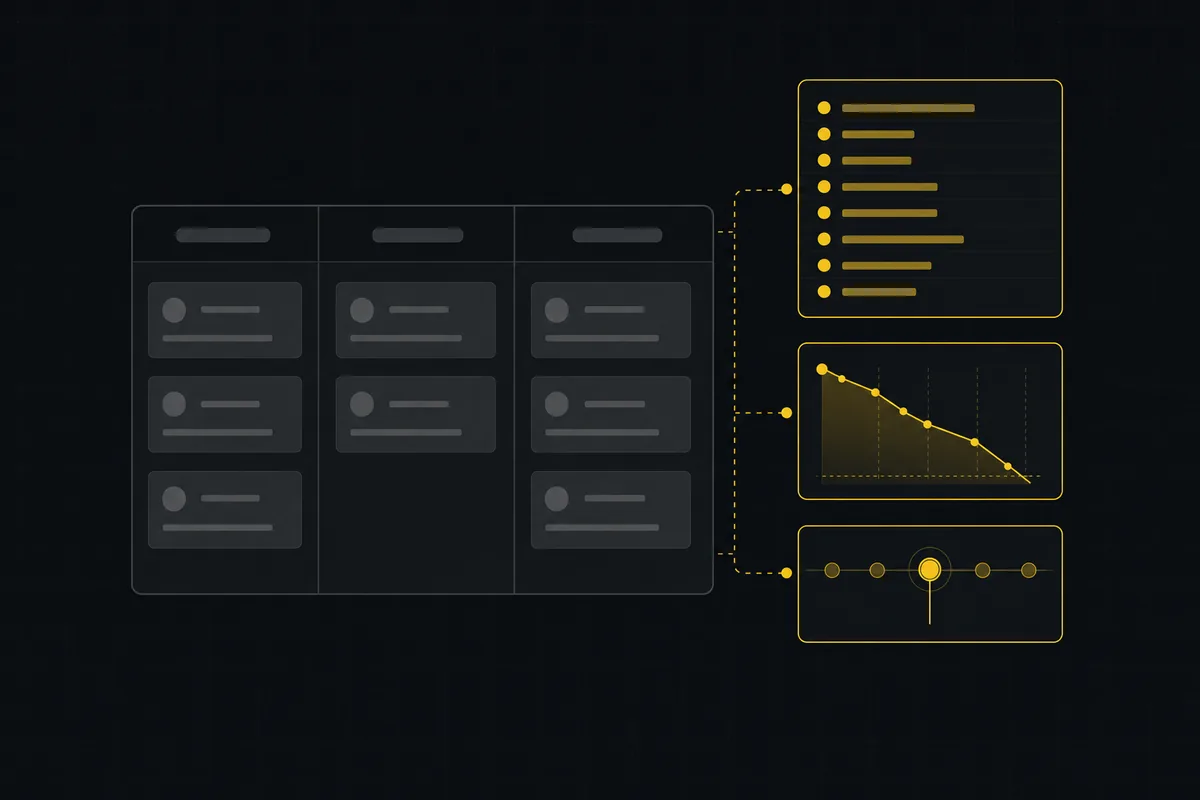
بديل Trello حين تتوقف اللوحة عن الكفاية
مقارنة لبدائل Trello: ما الذي ينكسر حين تتوقف اللوحة عن الكفاية، ومقارنة صريحة بين Trello وTaskfolk في الأسعار والميزات كما هي في يوليو 2026، وكيف تحتفظ باللوحة وتضيف إليها السبرنتات والباكلوج المرتّب والتقارير.
16 يوليو 2026 · 12 د قراءة

بدائل Asana: تكلفة أقل ووكلاء ذكاء اصطناعي كأعضاء حقيقيين
بدائل Asana للفرق المتنامية: كيف تقرّب شرائح مقاعد Asana فاتورتك إلى الأعلى، وكيف يغيّر تسعير Taskfolk بواقع 3 دولارات لكل منفّذ، مع مشاهدين ووكلاء مجانيين، نتيجة الحساب. الأرقام حتى يوليو 2026.
16 يوليو 2026 · 12 د قراءة
أضف تعليقًا
ابدأ النقاش.